Inside the Tool That Has Defined Visual Communication for Over Three Decades
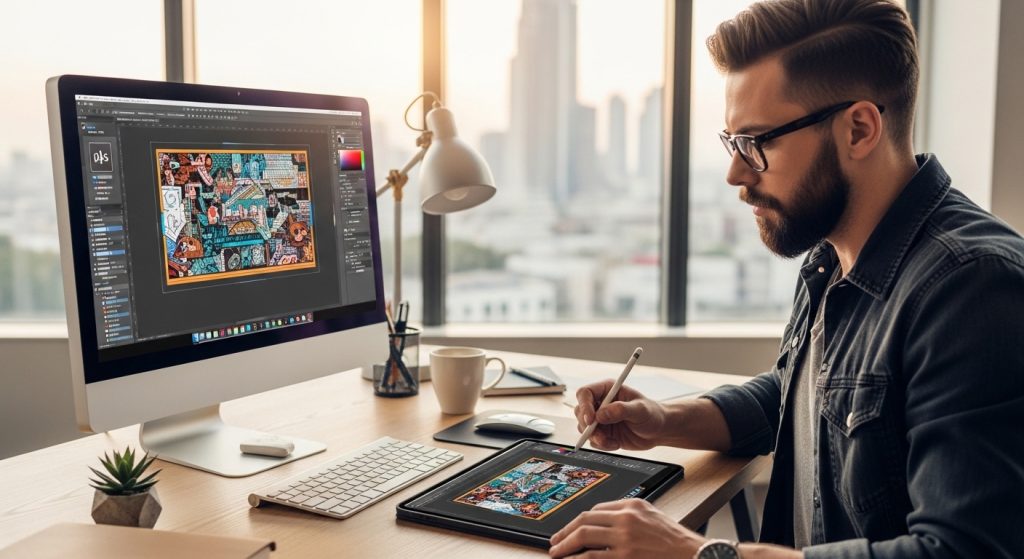
Every compelling image has a story behind it — not just the moment it captured, but the decisions made in editing. The right adjustment to light and shadow, the careful removal of a distracting element, the precise balance of color and contrast. These choices are what separate a photograph from a photograph that communicates. And for over three decades, the tool behind more of those decisions than any other has been Adobe Photoshop.
Yet for many photographers, designers, and creative professionals, the gap between the image they capture and the image they envision remains frustratingly wide. Manual retouching is time-consuming. Complex selections require precision that takes years to develop. And as project volumes increase, the time spent editing can quickly outpace the time spent creating. The result is a backlog of images that never quite reach their potential.
For professionals who compete on the quality of their visual output — photographers building client portfolios, designers creating marketing materials, content creators producing work for demanding platforms — the tools they use directly determine what they can deliver and how quickly. In this context, the difference between adequate software and excellent software is not a matter of preference. It is a matter of professional capability.
Adobe introduced Photoshop in 1990 and has continuously refined it for over thirty years. Today, it holds more than ninety percent market share among professional image editing applications worldwide. It is not simply the most popular choice — it is the expected standard. When clients, agencies, and employers evaluate creative work, Photoshop fluency is frequently assumed.
The current version of Adobe Photoshop combines its established precision tools with a new generation of AI-powered capabilities. Generative Fill allows users to extend images beyond their original borders, fill selected areas with AI-generated content, or remove unwanted elements — all with results that blend seamlessly into the original. Neural Filters apply complex retouching and style adjustments in seconds. Sky Replacement transforms outdoor photography with a single click. Cloud-based collaboration enables teams to share and edit documents simultaneously, with full version history preserved.
Free and budget editing tools continue to improve, but they consistently fall short in the scenarios that matter most: complex compositing, high-resolution print work, precise color management, and the advanced masking required for professional retouching. In these areas, Photoshop’s depth of capability remains unmatched.
The economic case for Photoshop is straightforward. For professionals whose income depends on the quality and volume of their visual output, the subscription cost is a fraction of what the time savings alone are worth. For those building toward a professional creative career, it is an investment in the tool that the industry has agreed upon.
“Photoshop’s AI features have fundamentally changed my workflow,” says a portrait photographer based in New York. “Tasks that used to take me forty-five minutes now take five. I have taken on significantly more clients without working longer hours.” The efficiency gains that AI-assisted editing delivers are reshaping what individual creatives can produce.
Visual quality is not an abstract goal. It is what determines whether an image is noticed, shared, purchased, or remembered. The right editing environment does not just improve images — it expands what is possible.
For photographers, designers, and visual professionals who take their output seriously, Photoshop remains the tool against which everything else is measured.